Keep your favorite rug looking its best for decades.

In our modern world, not much is built to last. Most furnishings are made to last between 5 and 15 years, after which they start to look a little worn and ragged. Fine Oriental rugs however stand out as a shining exception and can last for generations. This is especially impressive when you consider just how rough the traffic most rugs receive really is. Like most things, proper care plays an important role in preserving the life and value of your oriental rugs. Here are some quick tips to keeping your favorite rugs in great shape.

Tips for Prevention - 01.JPG
When properly cared for, a rug can look great for decades.  Believe it or not, this rug is about 125 years old.

Keep your carpet clean
Dirt is the worst enemy of fine Oriental rugs. Dirt is abrasive, and when it gets packed into the base of the knots it will actually cut off the fibers from the pile. We recommend vacuuming your rug at least weekly. Your vacuum should have an agitator or beater bar, set so that it beats the surface lightly. Excessive pressure of the beater bar can cause extra wear. Also, we recommend every two years having your carpet professionally washed. Proper washing removes all dirt that has collected in the carpet, restores the original colors of the rug, and rehydrates the wool in dry climates. Professional washing can only be done outside your home, so never allow anyone to come to your house and do a surface cleaning on your rug. Most services that come to the home are set up to clean wall to wall carpets, and your Oriental rug is very different. It is especially important that you never allow anyone to “steam clean” your Oriental rugs as this can cause the colors to bleed, and strips vital lanolin from the wool.

Walk on your carpet (Barefoot if you can)
Oriental carpets are made to be walked on. In the Middle East, most people remove their shoes when they enter a home, leaving the dirt on their shoes outside. In America we generally don’t do this, so timely cleaning becomes essential. Rubber soled shoes are hard on rugs, and tear at the wool fibers, wearing them prematurely. Bare feet or stocking feet are best for the rugs whenever possible. Walking on the carpet massages the lanolin through the wool, giving the carpet a beautiful luster. It also discourages moths from laying eggs on the carpet.

Moth Resist vulnerable areas
Moths look for dark, moist places to lay their eggs. It is actually the larvae which do the damage to any wool garment or rug, not the moths themselves. At Serafian’s, we spray a colorless, odorless solution that discourages the moths from laying eggs on any susceptible areas. Whenever a wool rug is hung on the wall it needs to be sprayed with this moth repellent.

Rotate your rug to even out wear
It is common that we walk through rooms in certain ways, establishing traffic pattern that receive more wear. With time, this can cause uneven wear patterns to form in your rug. Rotate your rug 180 degrees every six months to keep the wear and tear looking more even and less pronounced.
Tips for Prevention - 03
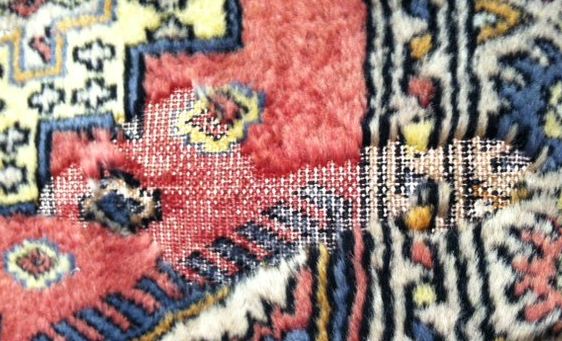
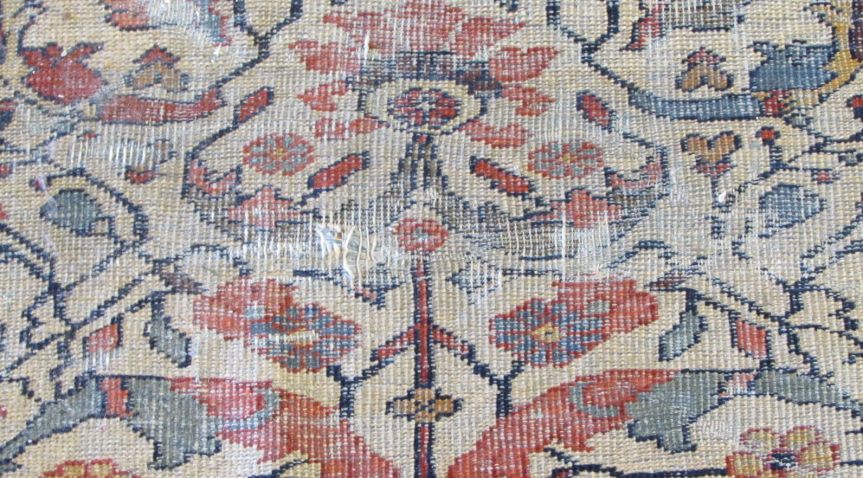
Eventually, a hole can wear right through the foundation of your rug.  Rotating it 180 every 6 to 12 months helps to prevent this.

Prevent Sun Fading
The desert Southwest has particularly harsh sunlight which can fade the rug. Many rugs get exposed to sunlight unevenly, causing fading only on part of the rug. Turn your rug 180 degrees in the room periodically to avoid uneven fading. This also helps your rugs wear more evenly. Close shades and blinds when you are not in the room to reduce the direct sunlight on your rugs. There are also window films available that reduce the ultraviolet radiation from sunlight. These films are applied to the window surface, and help block harmful rays. Look for “Low-E” films.

Blot up spills with clear cold water
Spills and stains are an inevitable part of a rug’s life. You should clean spills immediately, as many drinks can permanently dye the rug. Blot up the spill with a fresh towel, and use a little clear cold water to dilute the stain. Keep rinsing (not too much water) and blotting until the stain is gone. If someone spills milk on the carpet, it is probably a good idea to have the rug professionally cleaned, as the milk can sour and leave an unpleasant odor. Coffee, red wine, blood, and dark sodas can all leave permanent stains, so get to them as quickly as possible. If you have a “wet/dry” vacuum you can use it to suck out excess water from the rug.

Pet stains
Our beloved pets sometimes have “accidents”. Urine is particularly bad about staining, because it is acidic, but becomes alkali when it dries, which can cause dyes to bleed. Also, left untreated, urine will leave an odor that is very hard to remove. For urine stains, use the same procedure as above, but mix in about 50% white vinegar and be sure to rinse thoroughly. A thorough professional washing is required to sanitize the rug after a urine incident.

Repair any damaged areas quickly
Most repairs are very simple when they first appear. Attend to any tears or damage quickly. When we wash rugs at Serafian’s, we often see major repairs that would have been very minor if they had been attended to just six months sooner. Left unattended, many simple repairs become major repairs.

With these simple guidelines nearly any rug can last for decades if not generations. It is not at uncommon for us to see rugs come into our store that are over 100 years old and have been in use for their whole life.


17203026_1387415551330649_398135536548218379_n

By: Matt Gabel

Matt Gabel is the Retail Manager at Serafian’s Oriental Rugs. He has been working closely with rugs for over 25 years.  Serafian’s offers free pick up and delivery in the Albuquerque metro area. For more information, call (505) 504-RUGS or go to serafians.com

Rugs of the World – Kashan

When you think of rugs from the Mid East, what is the first image that pops into your head? For me, the image is magical flying carpets of legends and fairy tales. I picture Aladdin flying through the air on his magic carpet, the sprawling desert expanse unfolds below him as the horizon is dotted with the rooftops of ancient Persian castles and homes. It is a pretty fantastic visual, I know, but inextricably, I always picture him riding a specific type of rug, Kashan, one of the most classic Persian rug designs. One steeped in tradition from the city of its namesake.

In truth, Kashan is one of the oldest cities in the world. The city is thought to be one of the primary centers of civilization in prehistoric times. During the 11th century Sultan Malik Shah I ordered the building of a fortress, Ghal’eh Jalali, that still stands. The Sialk ziggurat, a man made structure over 5,000 years old is nestled comfortably in the suburbs of the Kashan. Even the name of the city comes from it original inhabitants, known as Kasian, whose remains date back as far as 9000 years.

In more modern times, the city of Kashan has become a major center for textile production, and rugs are one of its leading exports. Since the city of Kashan is one of the main weaving centers in Iran and its design traditions date back well over a century, the patterns found in Kashan rugs are considered to be among the most classic of Persian designs. They are defined by flowing, connected floral motif. Long, rounded tendrils, known as Islimi, span the body of the rug. These draw ornate curves connecting groups of large flowers, known as Palmettes. Many Kashan rugs have a strong central medallion, usually oval in shape. Some, however, lack a central motif and opt for an “All Over” design.

As with most weaving centers, many different levels of quality come from the city of Kashan. However, a common trait among most Persian Kashan is the use of high grade materials. As such, Kashan rugs are generally woven to last for generations. Persian Kashan use specific and traditional colors sets. Red or Ivory fields are offset with Navy medallions and borders. This creates a striking pattern where the body of the rug is sharply framed in contrast to its border.


One of the more recent trends in weaving is for other countries to adopt the designs of Persian rugs. Weavers in India and China will often copy the Kashan motif, working these classic Persian structures into into their more modern and mass produced rugs. This is not to say that these rugs are always of lower quality, but they are different. Kashan patterned rugs from India or China are often woven using non traditional colors sets. Blacks, browns, golds, and even greens will usually distinguish these rugs from their true Persian counterparts.

Kashan - 02.JPG
Many rugs from both India and China copy the Persian Kashan design.  They are woven in different colors than their Persian counterparts, but are often just as high quality.

Whether you have a traditional Persian or copy from India or China, a good, hand woven Kashan is the type of rug that will last for generations. It is not uncommon at all for us here at Serafian’s to see such rugs come in for cleaning still looking good after a century’s worth of use. Steeped in tradition and classic motifs, Kashan rugs look great in nearly any space. Unfortunately, even with the best Kashan available in the marketplace, you probably won’t find yourself magically flying over ancient Persian ziggurats or expensive desert vistas, but you will have a little piece of Persian history in your home.


17203026_1387415551330649_398135536548218379_n

By: Matt Gabel

Matt Gabel is the Retail Manager at Serafian’s Oriental Rugs. He has been working closely with rugs for over 25 years.  Serafian’s offers free pick up and delivery in the Albuquerque metro area. For more information, call (505) 504-RUGS or go to serafians.com

How to Protect your Rugs from Moths and Carpet Beetles

While spring brings welcome rain and flowers blooming, it also brings bugs. Lots of them. Wool moths, Tineola Bisselliella and carpet beetles, Anthrenus Verbasci. If any creatures on the planet can be called the enemy of oriental rugs, it’s these little buggers. These pesky intruders literally eat through the wool of your rug, causing damage quickly and quietly.

Too frequently, beautiful hand woven Persian or Navajo rugs come to Serafian’s for cleaning only to find the rugs have been destroyed by moths or carpet beetles. Worse yet, they often move swiftly, leaving a trail of damage in their wake.

Moth - 02
The damage in this rug occurred in about 1 to 2 weeks time.

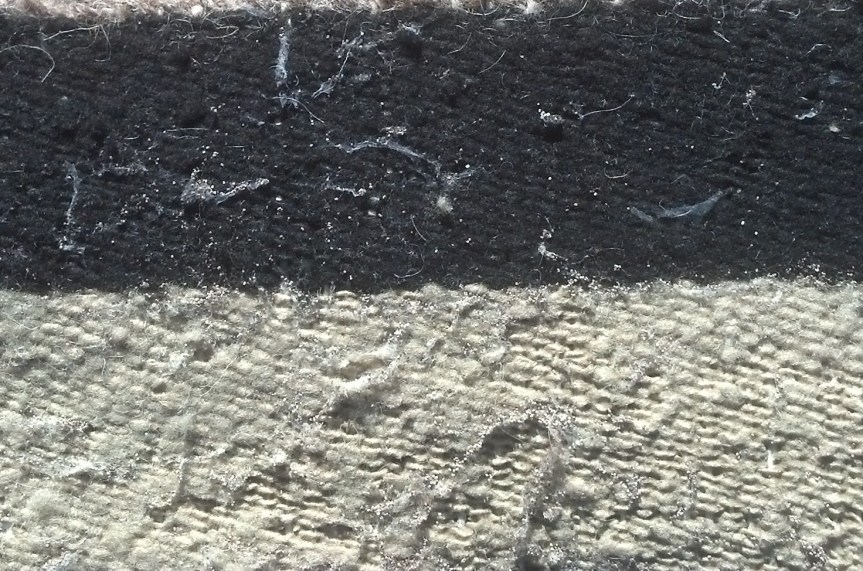
The lifespan of the average carpet moth is very short, the larvae phase lasts on average about two weeks to a month, and the adult phase about another month. Only the larvae eat wool, so while you are more likely to see the adults fluttering through your home, it’s the larvae that do the real damage. Unfortunately, this means that a rug can go from undamaged to having a huge hole in just a couple of weeks. Carpet beetles, however, do damage over more time, with a much longer lifespan and some subspecies living as long as three years. Unlike their moth counterparts, carpet beetles will eat at your rug for their entire life. In either case, quick identification, elimination, and prevention are the keys to keeping your rugs safe.

For a little more information on Moths, check out our very “Tongue-in-cheek” video here — https://www.youtube.com/watch?v=xvgxRnEqJKg

How do you identify them? For wool moths, keep an eye out for the adults flitting around your home or the eggs laid on the surface or on the back of your rugs. The large moths that we see every year here in the early months of summer are no threat to your rugs. Adult wool moths are small, about the size of a grain of rice. They are tan in color with no particular design or pattern on their wings. The eggs look like grains of sand held together by spider webs.

Moth - 01
The eggs themselves are tiny, about the size of a grain of sand.  The silky webbing from the parents hold the eggs in place.

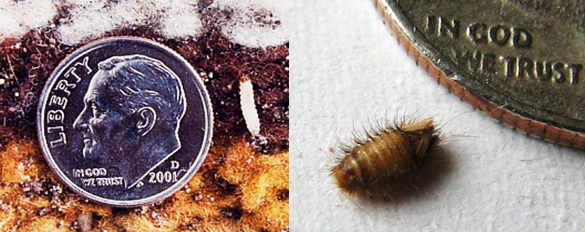
Carpet beetles are tiny, about the size of a pinhead. You can identify them by finding either the beetles themselves or by finding small black or brown husks or shells. In both cases, the insects like to attack dark and undisturbed areas on your rugs. So look for them under your furniture, rolled up in your closets, and on the backside of any rugs hanging on the walls.

Moth and Carpet beetle larva
These critters are pretty tiny. – Pictured above, the larval forms of each.

Elimination is a little trickier. You need to not only eliminate the moths, beetles, and eggs on the rug itself, but also any that might be in the surrounding area. Most insecticides are effective at killing any living infestation, but unfortunately not that great at killing off the eggs. Also, any use of insecticides in the home comes with risk to one’s own health and safety. Instead, we recommend you have your rugs professionally washed by a cleaner who knows how to eliminate these infestations. Proper temperature control and handling will eliminate any eggs that have been laid into the foundation of your favorite carpet. As for your home, thorough cleaning of any area exposed to infestation is very important as the eggs can slips into the cracks of your wood floor or down into your wall-to-wall carpet. As with your rugs, we recommend utilizing professional cleaners. If after taking these steps, the moths or beetles persist, it’s time to get in touch with an exterminator.

As with most things, an ounce of prevention is worth a pound of cure. Various sprays can help to repel moth infestation, regular inspection goes a long way to identifying a problem before it spirals out of control, and proper wrapping and storage of unused rugs can easily prevent infestation. Always remember that if you take a little time to ensure that your rugs stay moth and beetle free, it will ensure your favorite rugs stay beautiful and valuable for many years to come.


17203026_1387415551330649_398135536548218379_n

By: Matt Gabel

Matt Gabel is the Retail Manager at Serafian’s Oriental Rugs. He has been working closely with rugs for over 25 years.  Serafian’s offers free pick up and delivery in the Albuquerque metro area. For more information, call (505) 504-RUGS or go to serafians.com
How to Quickly Judge Quality in Hand Woven Rugs – A Buyer’s Guide to Hand Woven Rugs

When it comes to hand woven rugs, it can be tough to know exactly what you are looking at. In truth, while there are many factors that go into determining the quality of a rug, there are four to focus on.

First is knot count, or knots per square inch. In a hand woven rug, each not is tied one at a time, and much like the pixels on your computer screen, the number of knots per inch affects the resolution of the design in the rug. Most rugs are woven at 100 to 150 knots per square inch. Some of the finest rugs in the world are woven at 1,000 knots per square inch. The number of knots in a square inch tells you not only how fine the rug is, but also, how much time and work went into the rug. If a rug has twice as many knots, it took at least twice as long to weave. For this reason, knot count, more than any other factor, affects the price of your rug.

So how can you tell how many knots per square inch? To count the knots, use a ruler and examine the backside of the rug. In most rugs, each square you see is an individual knot. Simply count the number of squares both horizontally and vertically across the length of an inch then multiply the two numbers together. It’s important to note there are two types of knotting common in hand weaving. Asymmetrical (Or Persian) knotting leaves a single square on the back for each knot. However, the style of knotting known as symmetrical (Or Turkish) knotting leaves two squares on the back for each knot. If you notice that every single knot seems to have a twin, you are probably looking at a rug that uses the symmetrical knotting techniques. For these rugs, simply take whatever knot count you came up with and cut it in half.

The second factor to look at is thickness. As a general rule, the thicker the pile on a rug, the longer it takes for the rug to wear out. This is the easiest of all the factors to judge. It is simply defined by the heights of the pile. As a nice side benefit, thicker rugs tend to be softer underfoot and much more comfortable to walk on.

Third on our list of factors is weave density. Like thickness, this factor greatly affects the durability of your rug. Density is determined by how tightly packed together the fibers of your rug are. When a rug is more densely woven, the fibers provide each other with more support which helps to prevent excess wear from use and also keeps dirt from settling into the foundation of the rug where is grinds at the roots of the weaving. To test density, take your fingers, and try to run them into the foundation of the rug. The more difficult it is to do this, the more densely woven the rug is.

The fourth and final factor is wool quality. A good wool has an oily and supple feel, where a poor quality of wool will feel dry and “brashy” to the touch. A good wool will be more able to bend and flex though years of heavy use, where a bad wool will break apart under traffic and tends to wear out much more quickly. This is probably the most difficult of the four factors to judge, but the general rule is that a good wool feels good to the touch, while a bad wool, not as much.
Just remember to look out for the four big factors, knot count, thickness, density, and wool quality. Generally speaking, as long as you keep these in mind, you will have a good idea of what you are looking at when buying a hand woven oriental rug.


17203026_1387415551330649_398135536548218379_n

By: Matt Gabel

Matt Gabel is the Retail Manager at Serafian’s Oriental Rugs. He has been working closely with rugs for over 25 years.  Serafian’s offers free pick up and delivery in the Albuquerque metro area. For more information, call (505) 504-RUGS or go to serafians.com

What’s Hot in Home Decor for 2017

Social media has changed the way we decide on what’s hot and what’s not. Ten years ago, fashion was what the industry told you it was. Today, fashion is what we, as a community, make it. In 2017 what’s trending is anything eclectic and rustic.

If there are “Looks” that can be called the forerunners of 2017, they would be Industrial Farmhouse, Rustic Americana, and once again Boho Chic. Each of these styles brings a unique mix of traditional, contemporary, and personal styles.

Boho Chic epitomizes personal style and choice. Rich with color, bold, and full of unique character, Boho Chic was the go-to fashion pick of 2016 and will remain big in 2017. Decor in a Boho Chic home springs up from a single focal design point, like a colorful rug, a bright and beautiful wall hanging or tapestry, or even a unique statuette. From there, the sky’s the limit. Bright and bold, jewel tones, flowing fabrics, and disparate design elements are at the heart of Boho Chic. If you love it, it works, that’s the bottom line. Fill your space with color and kitsch and you have achieved that Boho chic look.

Similar, but with it own distinct twist, is Rustic Americana. A more aged and classic look, Rustic Americana opts for a slightly more conservative and muted design approach. Painted wood furniture, rescued looks, and warm earth and wood tones form the basis of Rustic Americana. Think old and American. Don’t be afraid to let your inner patriot out a little when decorating with this theme. American flags can be hand painted onto nearly anything from dilapidated wooden furniture to old metal toolboxes. Quilted fabrics, aged wood colors and textures, hooked and braided rugs, and (of course) the stars and stripes really pull the look together. Much like with Boho Chic, a space can be brimming with unique and stylized pieces.

Then lastly is my personal favorite, Industrial Farmhouse. Much like Rustic Americana, this look combines aesthetic of reused items and the warm feel of wood and earth tones. However, it has an overall much cleaner look incorporating a lot of metal, white, and grey tones. As the name implies, this look uses a considerable amount of metal. The look uses mixes of metal and wood showing up in furniture, accent items and accessories, and even in unique spots, with items like paper towel and key holders. Brass, copper, and steel tones all work together to create a very distinct and clean, yet cozy feel. Stark white counter tops and couches are used alongside colorful accents. Simple and elegant rugs such as the Magnolia Home line from Joanna Gaines are used along side rich blue and rust pillows or throws with simple geometric patterns create depth and color.

With both Boho Chic and Rustic Americana, the look can be almost cluttered. Think of it as organized chaos. There is tremendous space to create and develop one’s own personal style. With Industrial Farmhouse, the look is more structured, but clean and inviting. The space can feel very relaxed and open while at the same time cozy. While the first two invite you to get lost in the eccentricities of the decor, the latter invites you into the room to kick up your feet, take a deep breath, and just relax.

In 2017, there’s a “hot” look for your home, whatever your personal aesthetic is. From eclectic and kitschy, to clean and comfortable, 2017 is going to be a great year for making your space beautiful, fun, and most importantly: you. Happy New Year!


17203026_1387415551330649_398135536548218379_n

By: Matt Gabel

Matt Gabel is the Retail Manager at Serafian’s Oriental Rugs. He has been working closely with rugs for over 25 years.  Serafian’s offers free pick up and delivery in the Albuquerque metro area. For more information, call (505) 504-RUGS or go to serafians.com

The Importance of Area Rug Cleaning in Albuquerque, NM

807140

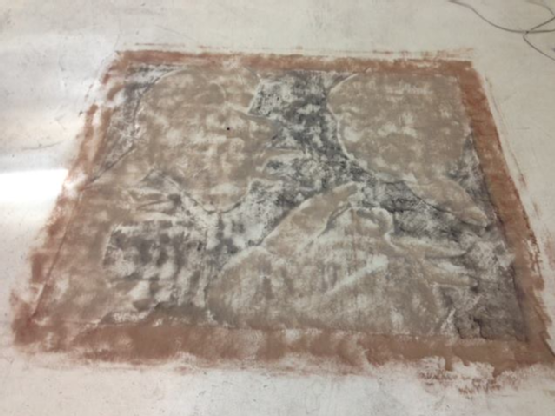
Believe it or not, this isn’t a rug. This is a pile of dirt. The rug this came from was so packed with dirt, that when we turned it over and beat the back side of it, you could clearly see the pattern and colors of the rug.

This was caused by the dirt slowly grinding away at the fiber of the rug from the inside, so when we beat it, a lot of wool came out alongside the dirt. Unfortunately, that slow grinding process took a lot of life out of this rug.

Packed in dirt is the number one killer of rugs over time. This is why we recommend having your rugs cleaned every two years. Doing so will prevent the dirt from getting too deep into the foundation and taking years away from the life of your rug.