Keep your favorite rug looking its best for decades.

In our modern world, not much is built to last. Most furnishings are made to last between 5 and 15 years, after which they start to look a little worn and ragged. Fine Oriental rugs however stand out as a shining exception and can last for generations. This is especially impressive when you consider just how rough the traffic most rugs receive really is. Like most things, proper care plays an important role in preserving the life and value of your oriental rugs. Here are some quick tips to keeping your favorite rugs in great shape.

Tips for Prevention - 01.JPG
When properly cared for, a rug can look great for decades.  Believe it or not, this rug is about 125 years old.

Keep your carpet clean
Dirt is the worst enemy of fine Oriental rugs. Dirt is abrasive, and when it gets packed into the base of the knots it will actually cut off the fibers from the pile. We recommend vacuuming your rug at least weekly. Your vacuum should have an agitator or beater bar, set so that it beats the surface lightly. Excessive pressure of the beater bar can cause extra wear. Also, we recommend every two years having your carpet professionally washed. Proper washing removes all dirt that has collected in the carpet, restores the original colors of the rug, and rehydrates the wool in dry climates. Professional washing can only be done outside your home, so never allow anyone to come to your house and do a surface cleaning on your rug. Most services that come to the home are set up to clean wall to wall carpets, and your Oriental rug is very different. It is especially important that you never allow anyone to “steam clean” your Oriental rugs as this can cause the colors to bleed, and strips vital lanolin from the wool.

Walk on your carpet (Barefoot if you can)
Oriental carpets are made to be walked on. In the Middle East, most people remove their shoes when they enter a home, leaving the dirt on their shoes outside. In America we generally don’t do this, so timely cleaning becomes essential. Rubber soled shoes are hard on rugs, and tear at the wool fibers, wearing them prematurely. Bare feet or stocking feet are best for the rugs whenever possible. Walking on the carpet massages the lanolin through the wool, giving the carpet a beautiful luster. It also discourages moths from laying eggs on the carpet.

Moth Resist vulnerable areas
Moths look for dark, moist places to lay their eggs. It is actually the larvae which do the damage to any wool garment or rug, not the moths themselves. At Serafian’s, we spray a colorless, odorless solution that discourages the moths from laying eggs on any susceptible areas. Whenever a wool rug is hung on the wall it needs to be sprayed with this moth repellent.

Rotate your rug to even out wear
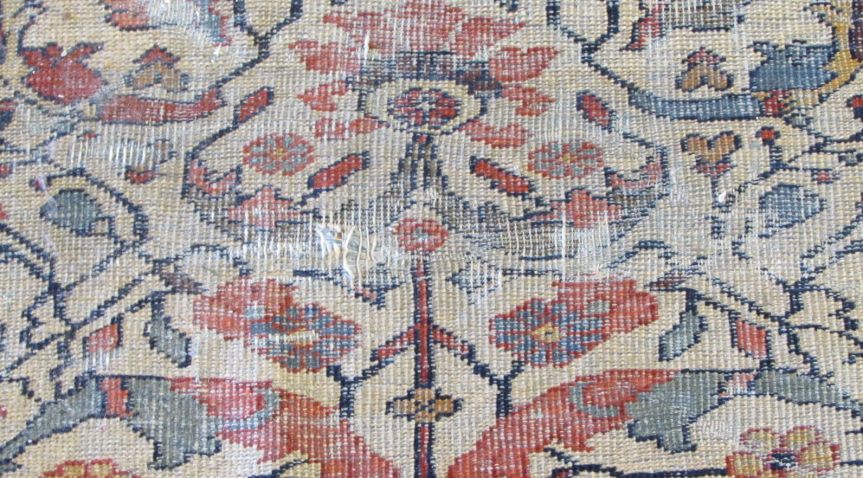
It is common that we walk through rooms in certain ways, establishing traffic pattern that receive more wear. With time, this can cause uneven wear patterns to form in your rug. Rotate your rug 180 degrees every six months to keep the wear and tear looking more even and less pronounced.
Tips for Prevention - 03
Eventually, a hole can wear right through the foundation of your rug.  Rotating it 180 every 6 to 12 months helps to prevent this.

Prevent Sun Fading
The desert Southwest has particularly harsh sunlight which can fade the rug. Many rugs get exposed to sunlight unevenly, causing fading only on part of the rug. Turn your rug 180 degrees in the room periodically to avoid uneven fading. This also helps your rugs wear more evenly. Close shades and blinds when you are not in the room to reduce the direct sunlight on your rugs. There are also window films available that reduce the ultraviolet radiation from sunlight. These films are applied to the window surface, and help block harmful rays. Look for “Low-E” films.

Blot up spills with clear cold water
Spills and stains are an inevitable part of a rug’s life. You should clean spills immediately, as many drinks can permanently dye the rug. Blot up the spill with a fresh towel, and use a little clear cold water to dilute the stain. Keep rinsing (not too much water) and blotting until the stain is gone. If someone spills milk on the carpet, it is probably a good idea to have the rug professionally cleaned, as the milk can sour and leave an unpleasant odor. Coffee, red wine, blood, and dark sodas can all leave permanent stains, so get to them as quickly as possible. If you have a “wet/dry” vacuum you can use it to suck out excess water from the rug.

Pet stains
Our beloved pets sometimes have “accidents”. Urine is particularly bad about staining, because it is acidic, but becomes alkali when it dries, which can cause dyes to bleed. Also, left untreated, urine will leave an odor that is very hard to remove. For urine stains, use the same procedure as above, but mix in about 50% white vinegar and be sure to rinse thoroughly. A thorough professional washing is required to sanitize the rug after a urine incident.

Repair any damaged areas quickly
Most repairs are very simple when they first appear. Attend to any tears or damage quickly. When we wash rugs at Serafian’s, we often see major repairs that would have been very minor if they had been attended to just six months sooner. Left unattended, many simple repairs become major repairs.

With these simple guidelines nearly any rug can last for decades if not generations. It is not at uncommon for us to see rugs come into our store that are over 100 years old and have been in use for their whole life.

17203026_1387415551330649_398135536548218379_n

By: Matt Gabel

Matt Gabel is the Retail Manager at Serafian’s Oriental Rugs. He has been working closely with rugs for over 25 years.  Serafian’s offers free pick up and delivery in the Albuquerque metro area. For more information, call (505) 504-RUGS or go to serafians.com

Rugs of the World – Kashan

When you think of rugs from the Mid East, what is the first image that pops into your head? For me, the image is magical flying carpets of legends and fairy tales. I picture Aladdin flying through the air on his magic carpet, the sprawling desert expanse unfolds below him as the horizon is dotted with the rooftops of ancient Persian castles and homes. It is a pretty fantastic visual, I know, but inextricably, I always picture him riding a specific type of rug, Kashan, one of the most classic Persian rug designs. One steeped in tradition from the city of its namesake.

In truth, Kashan is one of the oldest cities in the world. The city is thought to be one of the primary centers of civilization in prehistoric times. During the 11th century Sultan Malik Shah I ordered the building of a fortress, Ghal’eh Jalali, that still stands. The Sialk ziggurat, a man made structure over 5,000 years old is nestled comfortably in the suburbs of the Kashan. Even the name of the city comes from it original inhabitants, known as Kasian, whose remains date back as far as 9000 years.

In more modern times, the city of Kashan has become a major center for textile production, and rugs are one of its leading exports. Since the city of Kashan is one of the main weaving centers in Iran and its design traditions date back well over a century, the patterns found in Kashan rugs are considered to be among the most classic of Persian designs. They are defined by flowing, connected floral motif. Long, rounded tendrils, known as Islimi, span the body of the rug. These draw ornate curves connecting groups of large flowers, known as Palmettes. Many Kashan rugs have a strong central medallion, usually oval in shape. Some, however, lack a central motif and opt for an “All Over” design.

As with most weaving centers, many different levels of quality come from the city of Kashan. However, a common trait among most Persian Kashan is the use of high grade materials. As such, Kashan rugs are generally woven to last for generations. Persian Kashan use specific and traditional colors sets. Red or Ivory fields are offset with Navy medallions and borders. This creates a striking pattern where the body of the rug is sharply framed in contrast to its border.


One of the more recent trends in weaving is for other countries to adopt the designs of Persian rugs. Weavers in India and China will often copy the Kashan motif, working these classic Persian structures into into their more modern and mass produced rugs. This is not to say that these rugs are always of lower quality, but they are different. Kashan patterned rugs from India or China are often woven using non traditional colors sets. Blacks, browns, golds, and even greens will usually distinguish these rugs from their true Persian counterparts.

Kashan - 02.JPG
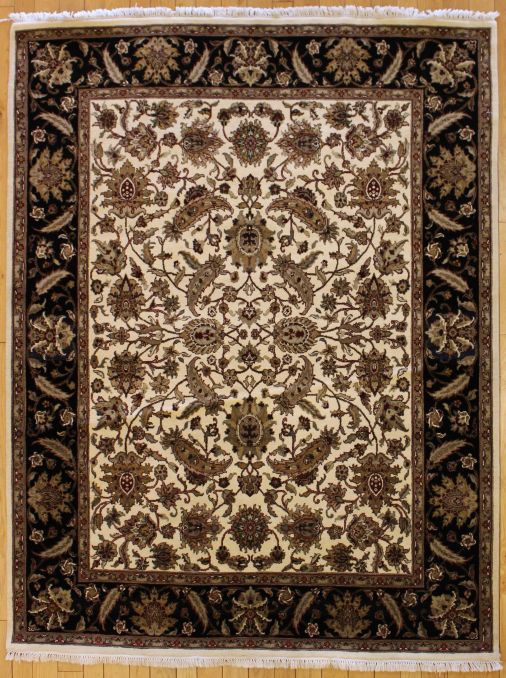
Many rugs from both India and China copy the Persian Kashan design.  They are woven in different colors than their Persian counterparts, but are often just as high quality.

Whether you have a traditional Persian or copy from India or China, a good, hand woven Kashan is the type of rug that will last for generations. It is not uncommon at all for us here at Serafian’s to see such rugs come in for cleaning still looking good after a century’s worth of use. Steeped in tradition and classic motifs, Kashan rugs look great in nearly any space. Unfortunately, even with the best Kashan available in the marketplace, you probably won’t find yourself magically flying over ancient Persian ziggurats or expensive desert vistas, but you will have a little piece of Persian history in your home.


17203026_1387415551330649_398135536548218379_n

By: Matt Gabel

Matt Gabel is the Retail Manager at Serafian’s Oriental Rugs. He has been working closely with rugs for over 25 years.  Serafian’s offers free pick up and delivery in the Albuquerque metro area. For more information, call (505) 504-RUGS or go to serafians.com

How to Quickly Judge Quality in Hand Woven Rugs – A Buyer’s Guide to Hand Woven Rugs

When it comes to hand woven rugs, it can be tough to know exactly what you are looking at. In truth, while there are many factors that go into determining the quality of a rug, there are four to focus on.

First is knot count, or knots per square inch. In a hand woven rug, each not is tied one at a time, and much like the pixels on your computer screen, the number of knots per inch affects the resolution of the design in the rug. Most rugs are woven at 100 to 150 knots per square inch. Some of the finest rugs in the world are woven at 1,000 knots per square inch. The number of knots in a square inch tells you not only how fine the rug is, but also, how much time and work went into the rug. If a rug has twice as many knots, it took at least twice as long to weave. For this reason, knot count, more than any other factor, affects the price of your rug.

So how can you tell how many knots per square inch? To count the knots, use a ruler and examine the backside of the rug. In most rugs, each square you see is an individual knot. Simply count the number of squares both horizontally and vertically across the length of an inch then multiply the two numbers together. It’s important to note there are two types of knotting common in hand weaving. Asymmetrical (Or Persian) knotting leaves a single square on the back for each knot. However, the style of knotting known as symmetrical (Or Turkish) knotting leaves two squares on the back for each knot. If you notice that every single knot seems to have a twin, you are probably looking at a rug that uses the symmetrical knotting techniques. For these rugs, simply take whatever knot count you came up with and cut it in half.

The second factor to look at is thickness. As a general rule, the thicker the pile on a rug, the longer it takes for the rug to wear out. This is the easiest of all the factors to judge. It is simply defined by the heights of the pile. As a nice side benefit, thicker rugs tend to be softer underfoot and much more comfortable to walk on.

Third on our list of factors is weave density. Like thickness, this factor greatly affects the durability of your rug. Density is determined by how tightly packed together the fibers of your rug are. When a rug is more densely woven, the fibers provide each other with more support which helps to prevent excess wear from use and also keeps dirt from settling into the foundation of the rug where is grinds at the roots of the weaving. To test density, take your fingers, and try to run them into the foundation of the rug. The more difficult it is to do this, the more densely woven the rug is.

The fourth and final factor is wool quality. A good wool has an oily and supple feel, where a poor quality of wool will feel dry and “brashy” to the touch. A good wool will be more able to bend and flex though years of heavy use, where a bad wool will break apart under traffic and tends to wear out much more quickly. This is probably the most difficult of the four factors to judge, but the general rule is that a good wool feels good to the touch, while a bad wool, not as much.
Just remember to look out for the four big factors, knot count, thickness, density, and wool quality. Generally speaking, as long as you keep these in mind, you will have a good idea of what you are looking at when buying a hand woven oriental rug.


17203026_1387415551330649_398135536548218379_n

By: Matt Gabel

Matt Gabel is the Retail Manager at Serafian’s Oriental Rugs. He has been working closely with rugs for over 25 years.  Serafian’s offers free pick up and delivery in the Albuquerque metro area. For more information, call (505) 504-RUGS or go to serafians.com
How to Identify a Rug’s Construction – What Makes a Good Rug?

The rug industry had long been known for fast talking, hard driving salesman with a reputation for being less than completely honest with their customers. It’s where the term “carpet bagger” came from. Some basic tips will protect you as you begin your rug buying process.

There are three main types of rug construction – Hand Knotted, Machine Woven, and Tufted.

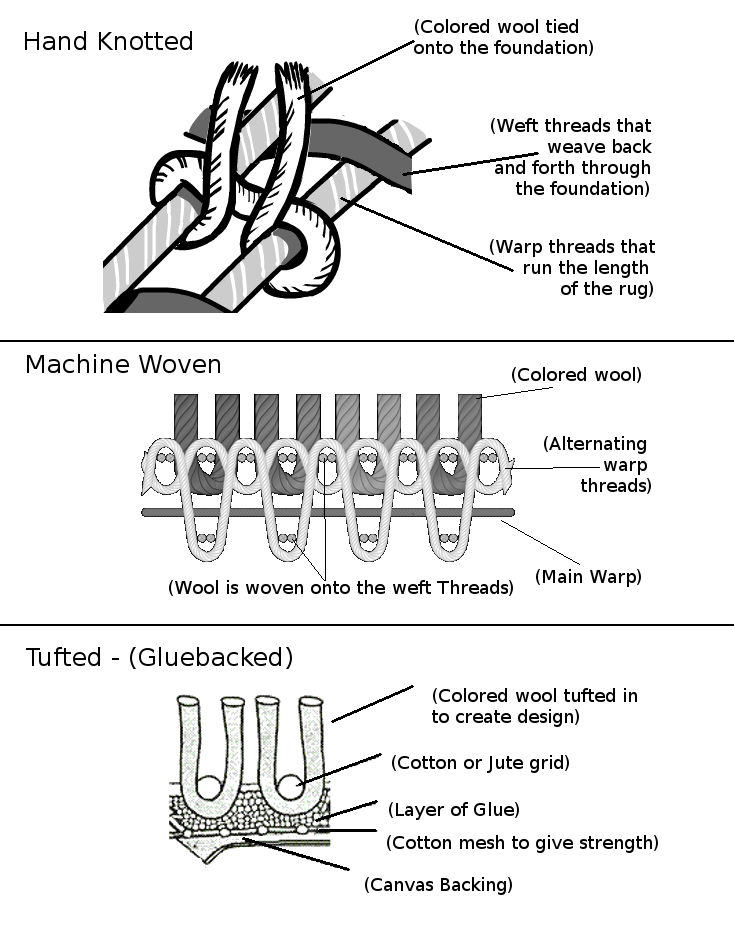
Hand knotted rugs are generally considered to be the best. They are woven one knot at a time on a loom. First, the weaver will take a strong cotton, wool, or silk and create the warp loom. These threads run from the top to the bottom of the rug. Taking a strand of colored wool and knotting it around two warp threads in the foundation creates each knot. Starting at one end of the rug, the weaver takes different colors of wool and, like pixels on a computer screen, and creates the design.

Once a full row of knots is woven, the weaver will weave in a weft thread. The weft thread runs perpendicular to the warp threads and literally weaves back and forth between them. This creates a tremendous amount of strength in the rug and also holds the knots in place.

While incredibly strong, the hand-knotting process is painstaking and time consuming. A room-sized rug can easily take well over a year to weave. Hand woven rugs will generally wear better than any other rug in the market and not surprisingly, cost more than their counterparts. A good hand knotted rug can easily last 50 to 100 years with proper maintenance.

Machine woven rugs are manufactured quickly with large machines. While there are a few different types of machines that will construct a rug differently from one to the next, machines are not capable of creating the same structure as hand weaving. Rather than having wool knotted and tied onto the foundation, most machine woven rugs are made with a simple “half wrap” technique where the colored fibers are held in place with much less strength than in hand woven rugs. The benefit of machine woven rugs is that they are much less expensive and simpler to produce. The average lifespan of a machine woven rug is between 20 and 25 years.

The last style is tufted rugs, which straddle the line between machine woven and hand woven. They are made by hand using a tool known as a “tufting gun.” This is a simple tool that can be used to shoot a U-shaped tuft of wool into a cotton or jute grid. Because people use the tool, it’s often referred to as “Hand Woven.” However, this type of rug is not hand woven at all. The tool produces a look and feel much like the hand knotted rug; however, it is prone to wearing out much more quickly. To combat this, manufacturers will glue a canvas backing to the underside of the rug. This helps to hold the rug together, but in time the glues will degrade and the rug will begin to fall apart and may even produce a latex smell. Most tufted rugs are woven to last around five to 10 years before they begin to degrade.

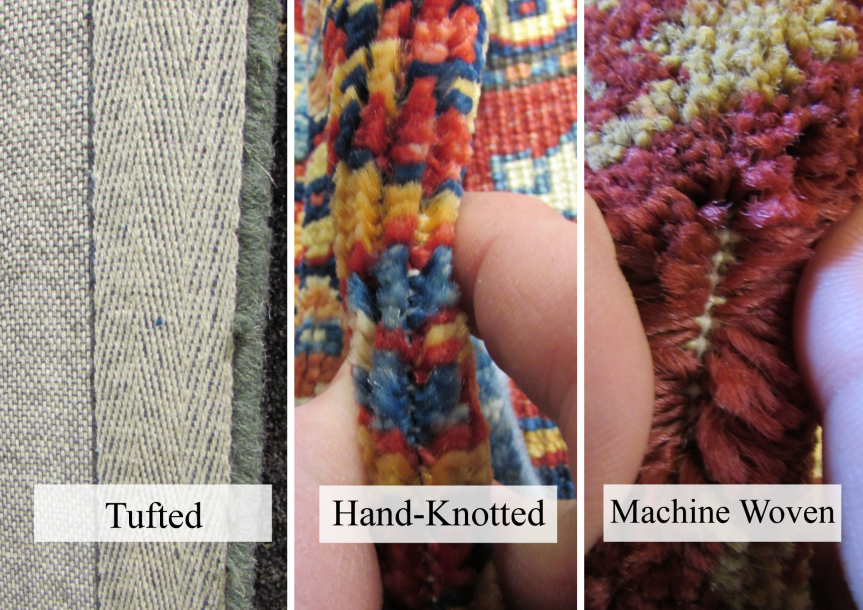
So how can the consumer tell the difference between these types of rugs? The easiest to spot is the tufted rug – buy looking underneath and finding the canvas glued to the bottom. When it comes to the other two, take a section of the pile and squeeze it along the long end. In a hand-knotted rug you will see the wool wrapping around the warp threads. In a machine woven rug, the thread itself becomes exposed as no wool wraps around it.

Look at the illustrations to better understand basic rug construction.

knotting-styles

Please note that within each category there It are large varieties with differing quality as well as subtle differences that can help a rug to last longer or cause it to wear out more quickly.

However, by understanding the basics, you will be better armed to make the right buying decision.

Want to see a quick video on everything mentioned here in the article?


17203026_1387415551330649_398135536548218379_n

By: Matt Gabel

Matt Gabel is the Retail Manager at Serafian’s Oriental Rugs. He has been working closely with rugs for over 25 years.  Serafian’s offers free pick up and delivery in the Albuquerque metro area. For more information, call (505) 504-RUGS or go to serafians.com

Transform A Room By Changing the Rug

Sprucing up a room design doesn’t have to require a huge budget. In fact, using an area rug can completely transform the look and feel of any room. House & Home editors Joel Bray and Jennifer Koper devote a YouTube video to showing three completely different looks by changing only a rug. See it here at:

https://www.youtube.com/watch?v=KLFP1I-pSFc

A good rug cannot only be the focal point of the design, but it can become the foundation of color and structure around which everything else can be added.

Rugs are a time consuming and difficult to create art form. A hand-woven living room sized rug can take months if not years to make. Because of that, you are much more limited in your options with rugs than with almost any other part of your design process. It is easy to find fabric to match a rug, but much more difficult to find a rug to match a fabric. Let the size of the rug, the shapes of its design, and the colors in it field and border guide your design process.

The first rule of thumb is to find a rug that you love and pick colors that complement. Unlike most furnishings, rugs can last for decades, even centuries, so find a piece you really love. Once the rug is found, find a couch or chairs that work well, drapes and blinds that complement the colors in the rug, and other design elements you want to incorporate with and around your decorating style.

Generally speaking, oriental rugs never really quite go perfectly with anything. But their colors can be used to anchor the design together. So when you follow this thinking, rugs tend to work with everything.  

When designing, keep in mind space and proportion. The rug can overwhelm or cramp a space if it is not planned properly. Always use the old carpentry advice, measure twice, cut once, or in this case, measure twice, buy once. Give a minimum of a half-foot around the edge of the rug to help frame the space. More of a border is certainly acceptable, but when rugs crawl right up against the wall, they look awkward. If the rug just barely fits under your coffee table, it probably is too small, let it fill the room a little more. Additionally, since they are on your floor, rugs more than any other furnishings create and define the boundaries of your space. A larger rug will make a space feel more pulled together and coherent, where a slightly smaller rug can make a space look and feel more open and spacious.

Feel free to vary your textures. Varied textures in a space create interest and dimension. Whether your rug is a solid shag, an ornate Persian, or a simple tribal kelim, the texture of it is a great place from which to build the textures in your room. The smooth surface of a leather couch will contrast a tribal or shag rug. The rustic texture of a throw can offset the ornate design of classic Persian motifs.  

As long as you keep color, proportion, and texture in mind, decorating around your rug is easy and a great adventure. If you are completely stumped or overwhelmed, the retail team at Serafian’s Oriental Rugs are always available to help. Just take a picture of your space and we will find the right pieces to pull it all together.


17203026_1387415551330649_398135536548218379_n

By: Matt Gabel

Matt Gabel is the Retail Manager at Serafian’s Oriental Rugs. He has been working closely with rugs for over 25 years.  Serafian’s offers free pick up and delivery in the Albuquerque metro area. For more information, call (505) 504-RUGS or go to serafians.com

How to Treat A Pet Urine Spot on Your Oriental Rug

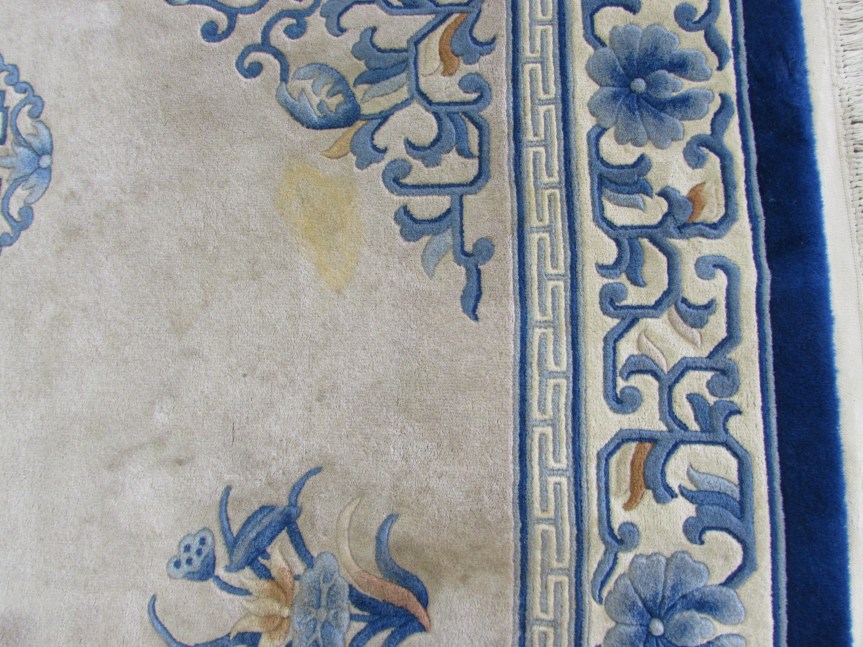
We all love our animals. They brighten our days, lift us up when our spirits are down, and make our homes feel complete. Unfortunately, accidents are inevitable, and even the best dogs and cats will occasionally have an accident on your Oriental rugs. Today, we are going to go over a few quick steps you can take to help prevent damage and odor from pet urine. Keep in mind, these steps can be effective at removing urine from your wall to wall carpet as well.

img_7281-02

You will need- White Vinegar and paper towels or dry rags.

img_7278

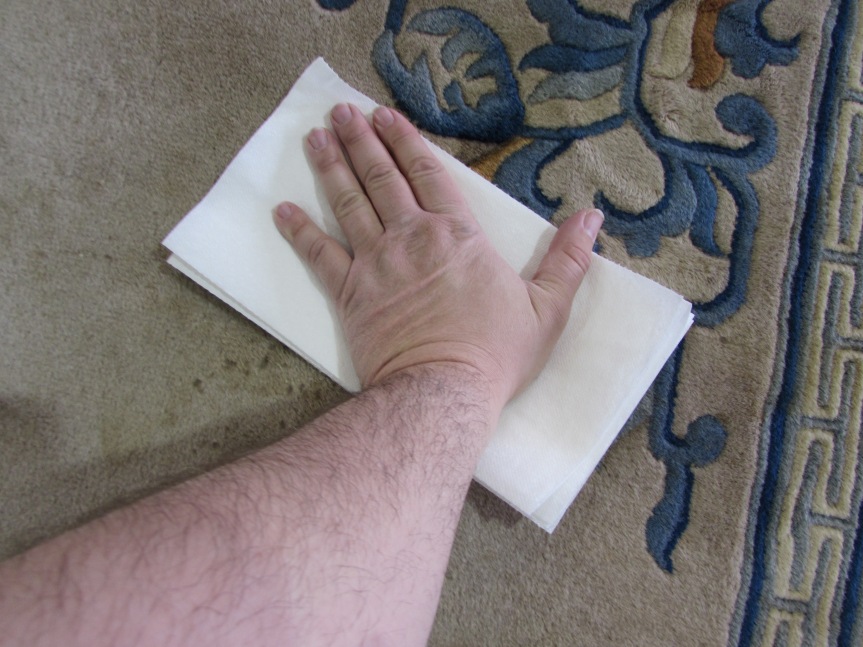
Step 1 – If the spot is still wet, poultice the area. If it is already dry, move on to step 2.

The first reaction a lot of folks have is to wipe the area up with a wet rag. A much more effective method is “poulticing”. To poultice a spot, take a dry rag or paper towels and apply downward pressure on it. The moisture will soak into the rag and get sucked out of your rug. A poultice is more effective because it doesn’t spread the spot around and removes a much greater quantity of moisture. It’s important to note, that if you own good wet vacuum that is capable of removing moisture, you can use that instead of poulticing the spot.

poultice
Pressing down instead of wiping is key

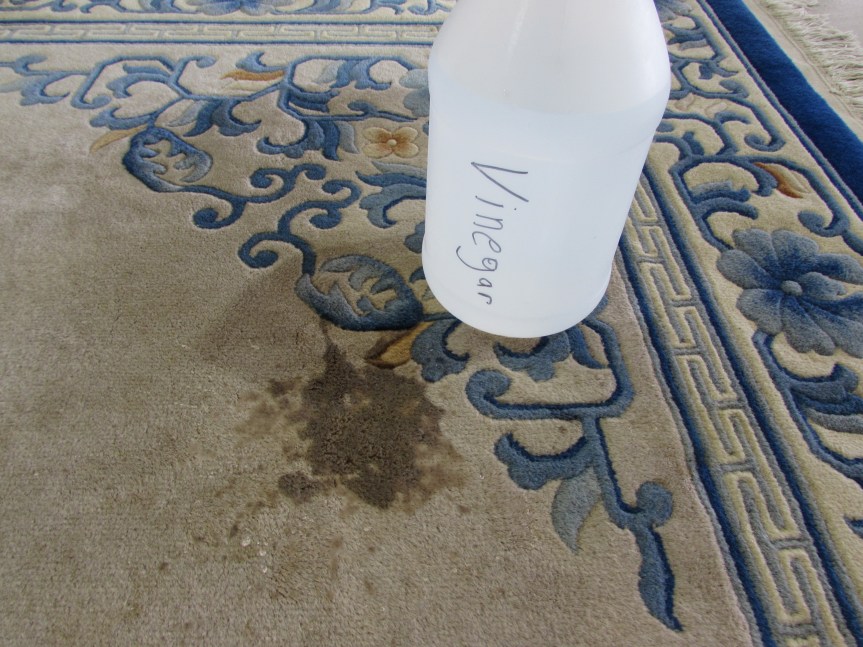
Step 2 – Apply white vinegar.

White vinegar is great for eliminating the odor of most pet urine. It also helps to keep the dye in your rug set, preventing color migration. Pour enough white vinegar directly onto the spotted area to soak it. While the odor of the vinegar is intense, it will fade quickly as the area dries out.

img_7282

Step 3 – Let it sit for 3 to 5 minutes.

We call this “dwell time”. The white vinegar will help break down the bonds holding the urine in place. This is especially important if you are dealing with cat urine as it tends to have oils that need to be broken down.

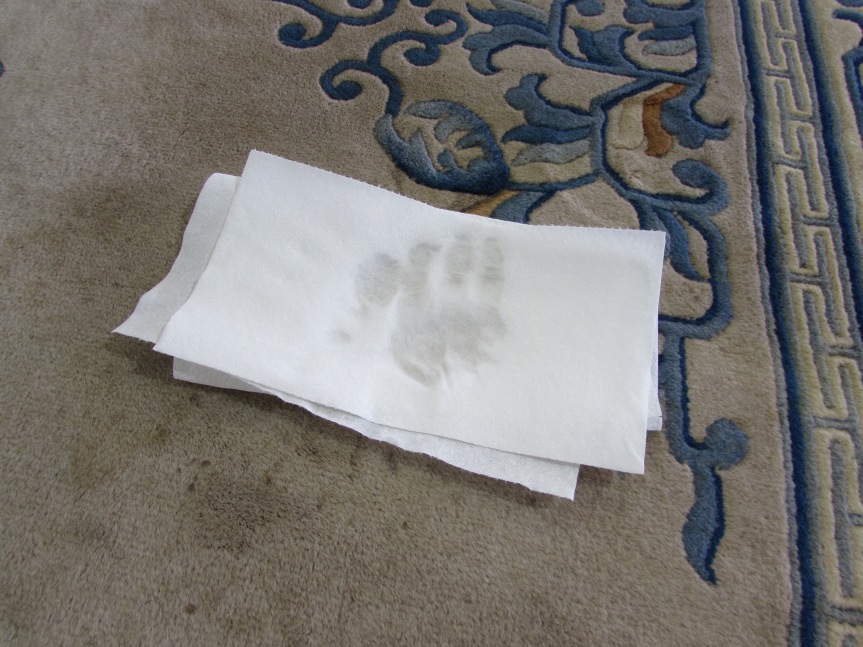
Step 4 – Poultice out the white vinegar

Much like step one, use a poultice to remove the white vinegar. Again, if you have a good wet vacuum, you can use it instead.

IMG_7286.JPG
If your paper towels get too soaked, just throw them out and grab some dry sheets

Step 5 – Smell the area, possibly repeat steps 2 through 4.

Take a quick sniff of the area, if you can still smell the urine over the vinegar, it means you need to repeat steps 2 through 4. If the white vinegar is the only thing you are smelling, move on to step 6.

Step 6 – Dry the area quickly and correctly.

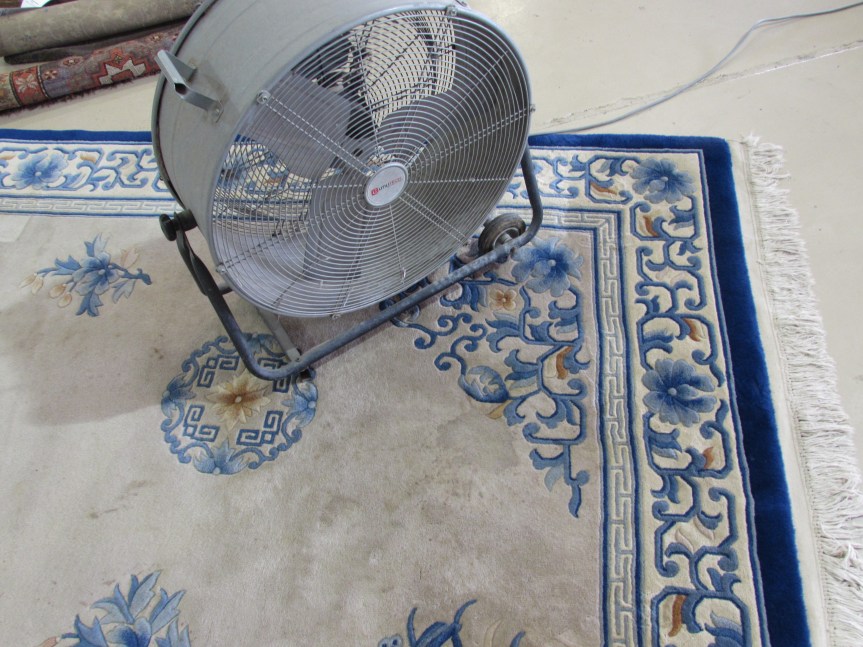
Getting your rug dry quickly and effectively is a crucial part of keeping the bacteria in the urine from heavily reproducing. Air flow is key, so using a box fan or desk fan to blow over the wet area will go a long way towards this. If you can expose both the top and bottom of the rug to that air flow, it will speed up the process tremendously. You can prop books up underneath your rug or even drape it over a chair to achieve this.

IMG_7291.JPG

Once dry, you have done all you can to treat the spot. In most cases, you will find that the smell is gone and the staining reduced. It is important to note, that while this helps the appearance and smell of your rug, it does not really disinfect it. If sterilization is what you are after, or if problems still persist, it’s probably time to have your rug washed professionally. Full immersion cleaning is by far the most effective technique for eliminating and disinfecting urine.

When it comes to prevention, consistent training of your beloved pet is the first step. Some great material on how to train your pets can be found here –

https://www.cesarsway.com/dog-training/housebreaking-issues/housebreaking

Even the best trained pet will have occasional accidents, so what can you do to help make sure those accidents don’t soak into your rug? We recommend Fiber ProTector brand stain guard.  Built to keep moisture form soaking into the fibers of your rug, Fiber ProTector can keep any accident from becoming a more troublesome spot. 

Fiber Protector on a Fine rug.gif

And of course, always remember that for a tougher more stubborn spot, Serafian’s can get your rug 100% clean and disinfected.  If you have any questions about these steps or other rug related questions, feel free to e-mail us: Serafians@gmail.com


17203026_1387415551330649_398135536548218379_n

By: Matt Gabel

Matt Gabel is the Retail Manager at Serafian’s Oriental Rugs. He has been working closely with rugs for over 25 years.  Serafian’s offers free pick up and delivery in the Albuquerque metro area. For more information, call (505) 504-RUGS or go to serafians.com
The Importance of Area Rug Cleaning in Albuquerque, NM

807140

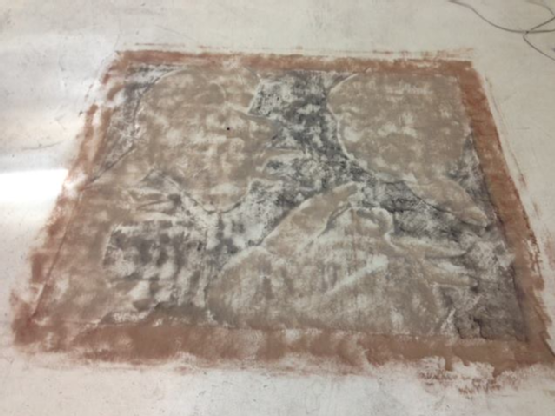
Believe it or not, this isn’t a rug. This is a pile of dirt. The rug this came from was so packed with dirt, that when we turned it over and beat the back side of it, you could clearly see the pattern and colors of the rug.

This was caused by the dirt slowly grinding away at the fiber of the rug from the inside, so when we beat it, a lot of wool came out alongside the dirt. Unfortunately, that slow grinding process took a lot of life out of this rug.

Packed in dirt is the number one killer of rugs over time. This is why we recommend having your rugs cleaned every two years. Doing so will prevent the dirt from getting too deep into the foundation and taking years away from the life of your rug.

Restorations with a Santa Fe Oriental Rug Sales and Repair Company

Serafian's Oriental Rugs
Serafian’s Oriental Rugs

” Professional cleaning is one of the best ways to maintain the durability and appearance of your Oriental rug. When dirt, moisture and mildew accumulate abundantly, your rug becomes more prone to dry rot and warps. Its dyes will also fade or be masked by unsightly debris, stains, and even odors. Area rug cleaning in Santa Fe resolves those issues with safe, quality sanitation products and cleaning processes. The professional cleaner helps in reinforcing the strength of the carpet that may even fully reveal its vibrant colors and patterns.

Promptly repairing wear and tear signs make Oriental rugs longer-lasting. Small tears, holes, worn fringes, curling edges and other structural defects may seem inconsequential, but they can be the sources of more extensive damages. When these concerns are observed, especially on precious antique carpets, look for expert Oriental rug repair companies like Serafian’s. These pros will use decades of experience and precise skills to restore your cher
https://blog.serafians.com/824122/2014/04/04/restorations-with-a-santa-fe-oriental-rug-sales-and-repair-company.html