Amazing New Fiber Protection Technology!

Serafian’s has sold various fiber protection and stain-repellant products over the course of our history. We are extremely pleased and excited to announce that we have finally found a product that not only do we believe in 100%, but completely amazes us in its effectiveness!

547 Fiber ProTector was created by Norweigan scientists and is a hydrophobic polymer spray that is unquestionably the most advanced and effective fiber protection system available. This isn’t Scotch Guard, and it’s not a temporary fail-safe against staining.

Fiber ProTector forms an invisible shield around textile fibers providing an effective barrier against all kinds of organic matter such as pet stains, as well as food, drinks, dust and debris that on unprotected tiles would create permanent stains.

Our new Fiber ProTector adds UV protection and does not affect the texture of your surfaces or their breathability.  This product is used by major hotel chains, railroad trains, and airlines to protect their seating and furniture. Your rug should benefit from our protection! Call us at Serafian’s to have your rugs treated with 547 Fiber ProTector today.


Holiday Wash In Full Swing!

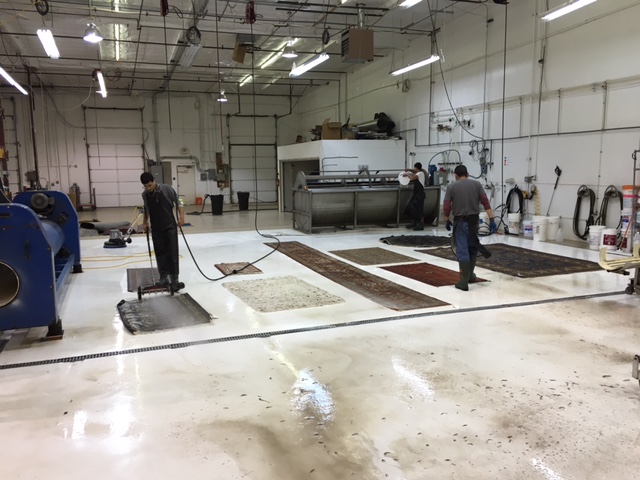
We asked Albuquerque to bring in their rugs for cleaning before their holiday guests arrived, and they’ve responded in a big way. Our new wash facility, built earlier in the year, is now operating at full capacity, with water flowing, soap bubbling, and dirt disappearing at an unprecedented rate! Here you can see our washers hard at work using our newest rug-cleaning machinery and tools. We’ve worked tirelessly to innovate and refine our process, and our customers are starting to see the results. Using our expanded building, 1,200 gallon wash tub, large centrifuge to spin water out of the rugs at 900 RPM, and a plethora of other tools, products, and techniques, New Mexico’s carpets are now being cleaned better and more thoroughly than they’ve ever been before.

IMG_3480
Intrepid wash warriors of the sudsy plains take to their task. 

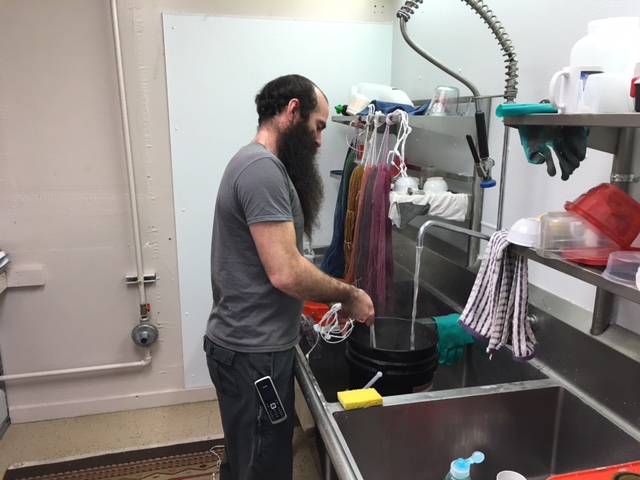
In addition, the services we offer beyond cleaning have expanded as well. Here, you can see our Wash manager, Brian, hand-dying wool in preparation for a restorative repair on an old, damaged carpet. Also, the fabric protection, rug padding, and storage solutions we offer are second to none as we continue to grow.

IMG_3481
Brilliant colors made by a contentiously brilliant man. 

As you can see, we’re proud of the progress we’ve made as a business, and we have you, our customers, to thank for it. Stay with us as we have even more major improvements and announcements to make in the near future, and Happy Holidays!

Larry Mitchell Music Video shoot – featuring Serafian’s Rugs!

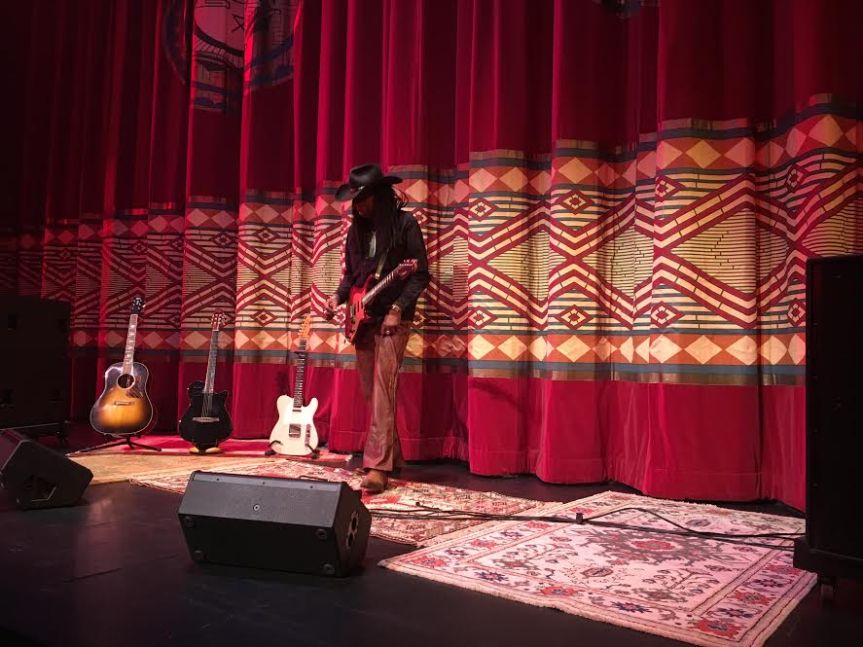
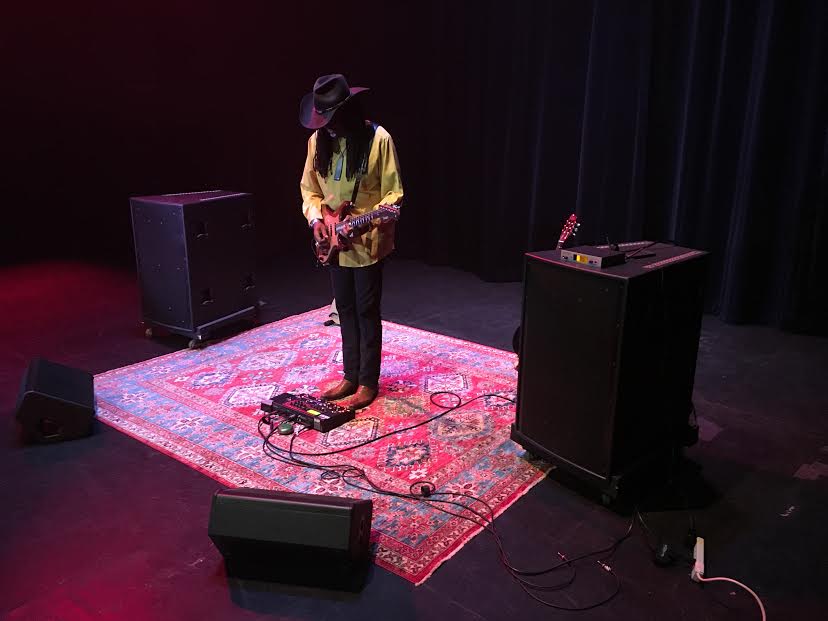
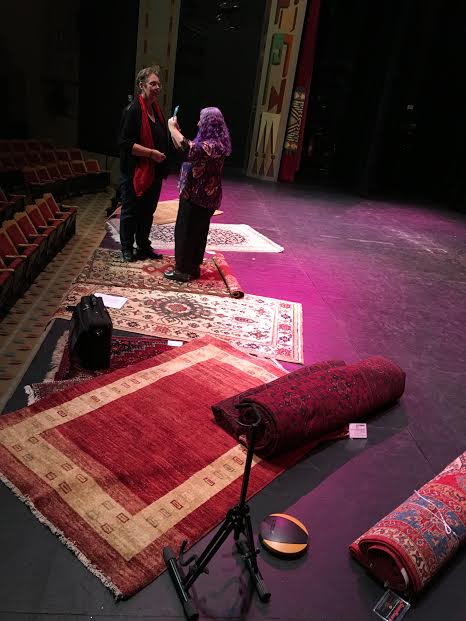
Today, world famous guitarist Larry Mitchell shot a new music video, and Serafian’s was honored to have our rugs present as the setpieces! Larry Mitchell is a Grammy award-winning producer, engineer and performer who has toured the world playing guitar with well-known artists including Tracy Chapman, Billy Squier, Ric Ocasek and Miguel Bosé.

We will be sure to post the video for everyone to see when it is completed. In the meantime, here are some images from the shoot.

26367747-e523-41f2-9082-8823fe121b64

2c13b48f-3238-4d8e-a55c-aa46b92b0195

2c865992-07d1-48de-8718-ca762458b61f

The Gohar Carpet

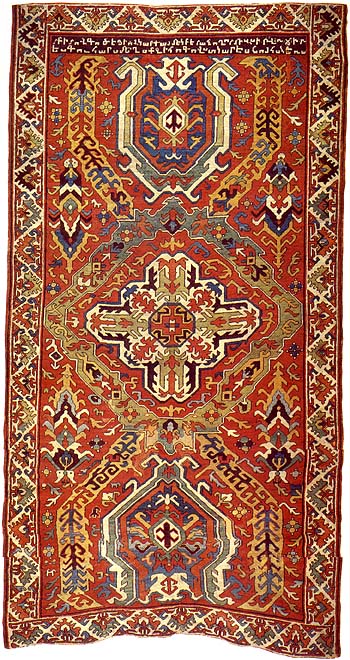
All hand-woven carpets are one of a kind, but a special few stand out as truly unique from among them. The “Gohar Carpet”, woven in Armenia in 1149, is one of these. The colors and patterns of this 12th century masterpiece are evocative of antique Caucasian weaving, but the truly unique aspect of this piece is the long Armenian religious script near the top. The text was translated by eminent linguist Norayr de Byzance in 1908 as:

“I, Gohar, full of sin and weak of soul, with my newly learned hands wove this rug. whosoever reads this say a word of mercy to God for me. In the year 1149.”

The Armenian calendar date is equivalent to 1679–1680 A.D.  The “Gohar Carpet” is unusual in that it records the maker’s name. (Gohar or Kohar remains a popular girl’s name in Armenia). The carpet was made for the woman’s church and was probably used only for ceremonial occasions as it remains in an exceptional state of preservation.

We hope you enjoyed this brief look at an exquisite and rare carpet from the distant past. The Gohar carpet was sold to a private collector in 2003. Follow us on facebook for more updates like these!

-Serafian’s Oriental Rugs, Nov. 2015

Rugs of the World – Kazak

One of the more popular types of rugs in the market place these days in known as Kazak. Truth be told, there are two distinctly different types of Kazak. One is the traditional old Kazak woven previous to the 1900’s. The other is a newer type of Kazak based on the older designs that comes form Afghanistan.

The older Kazak were woven by the Armenian people. In fact, Kazak is one of the more famous Armenian weavings. Done in the area of Turkey south of the Caucasus, Kazak were known for using geometric designs, high quality wool and fine knot counts.

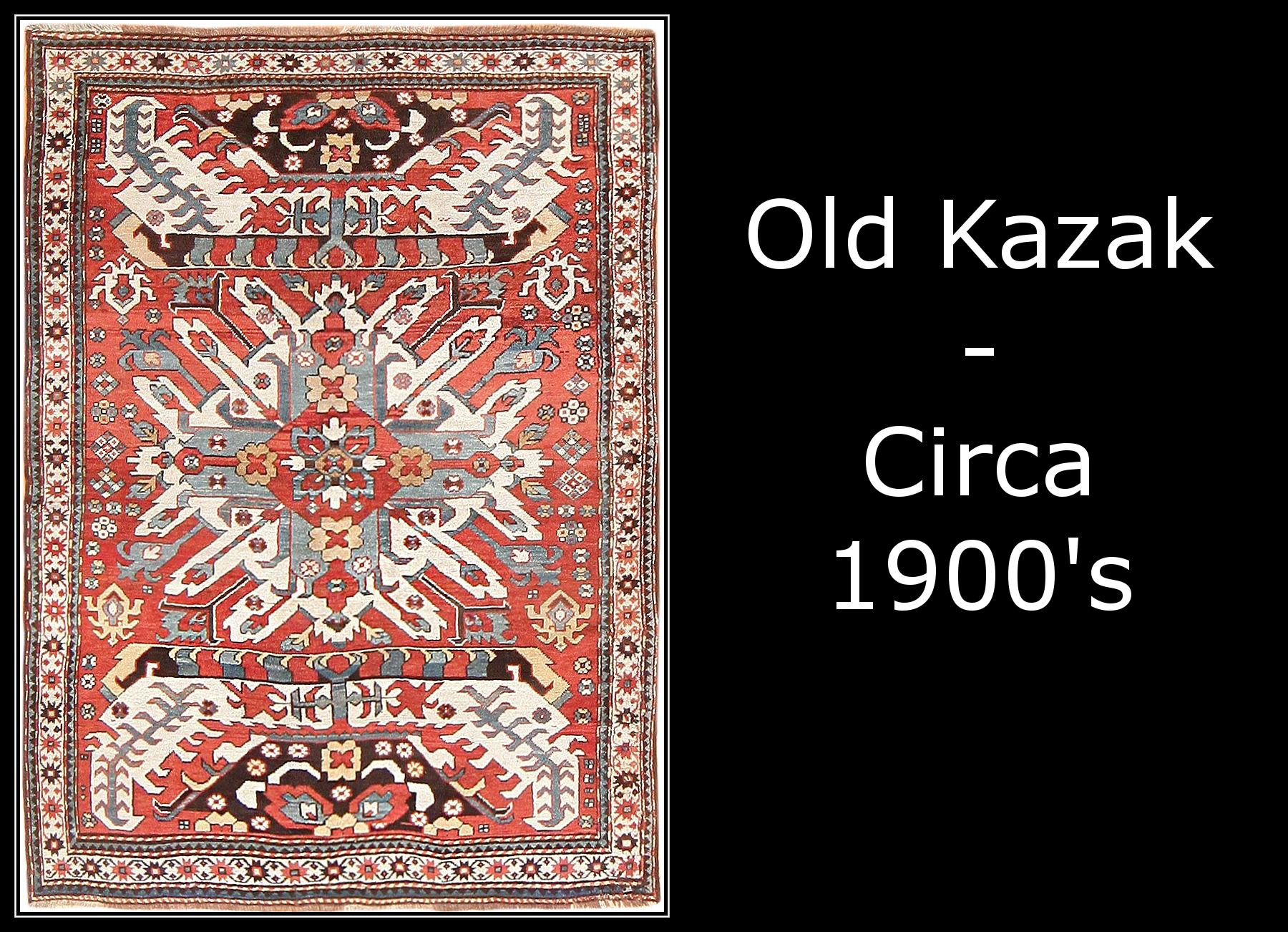
Known for their large scale patterns and usually high contrasting colors, Kazak rugs tend to be very distinct. Some Kazak use a palette of colors in the blue and red ranges while others are very bright delving into the greens and yellows. Generally they are woven in wool on a wool foundation and use Turkish, or symmetrical, style of knotting. Due to their nature, colors, and age Kazak rugs tend to be considered very collectible.
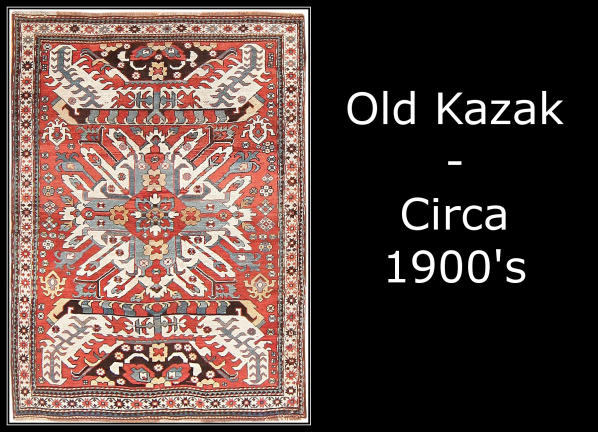
Old Kazak - Circa 1900's

The newer Kazak have a different origin. In the early to late 1990’s, many Afghani refugees had been forced to relocate to Pakistan. Lacking any form of consistent income, they turned to weaving to try and support themselves. During this time frame, many designs moved away from the traditional dark red and black Afghani patterns and into a broader spectrum of colors and patterns.

In the early 2000’s, after the US invasion, most of these refugees traveled back to Afghanistan. They took with them some of the new patterns and techniques that they had learned and developed while in Pakistan. As such, many modern Afghani rugs have branched outward from their normal weaving traditional. Modern Kazak were born out of this.

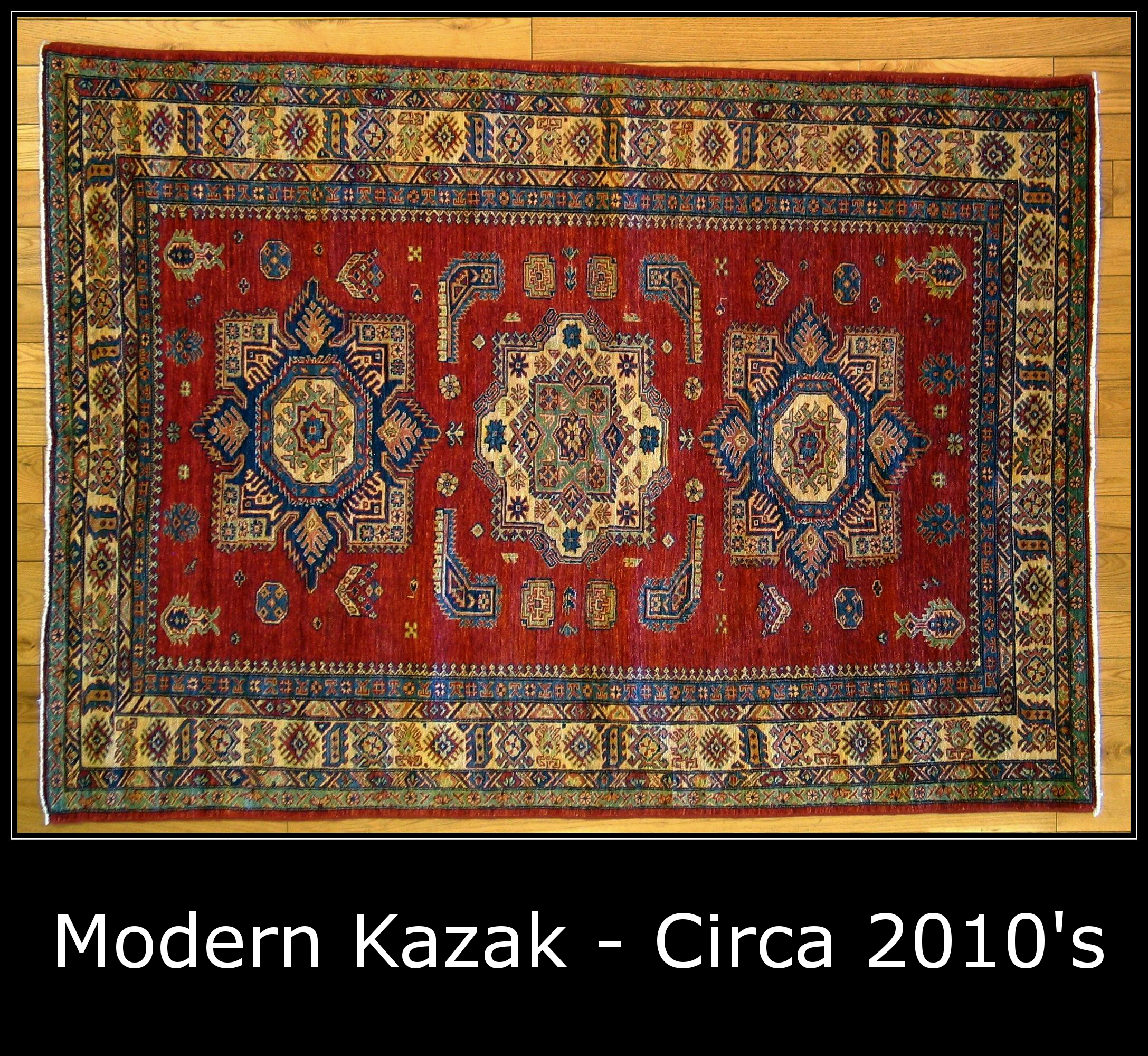
Based on the old Turkish Kazak patterns, these modern Kazak use bright bold colors, strong geometric motifs, and hand spun wool. Unlike their older counterparts, modern Kazak are woven with cotton foundations. Most are woven using Ghazni wool harvested form sheep raised the in Ghazni mountain ranges of Afghanistan. This wool is very dense and makes for a very strong rug. As such most modern Kazak to last well into the late and even next century.

Modern Kazak - Circa 2010's


17203026_1387415551330649_398135536548218379_n

By: Matt Gabel

Matt Gabel is the Retail Manager at Serafian’s Oriental Rugs. He has been working closely with rugs for over 25 years.  Serafian’s offers free pick up and delivery in the Albuquerque metro area. For more information, call (505) 504-RUGS or go to serafians.com

Keep your rug safe from Moths and Carpet Beetles

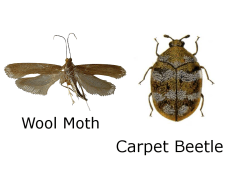
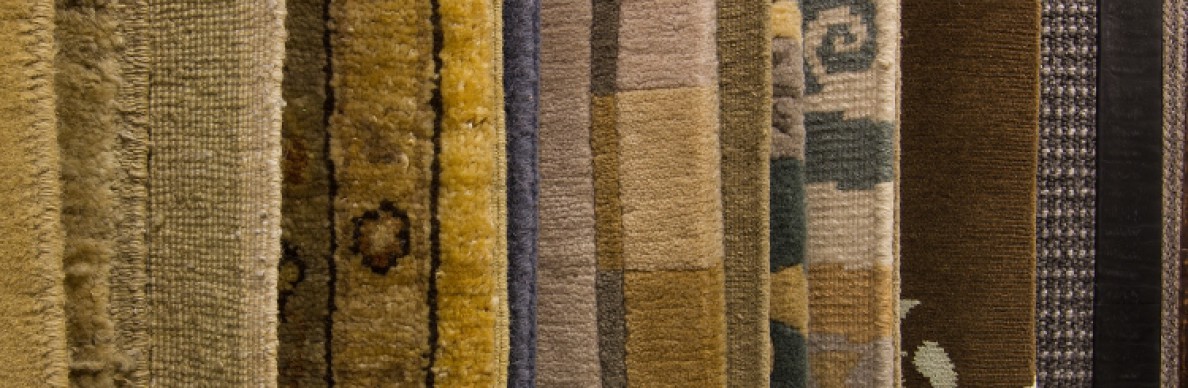
Moth and Beetle

Rugs are some of the most durable home furnishings you can purchase. They are woven to be walked on and receive the heaviest traffic and abuse, but still last generations. In fact, rugs have very few “Natural Enemies”.  Chief among those diabolical foes are Moths and carpet beetles.

When it comes to rugs, few things can compete with the destructive force of a swarm of hungry
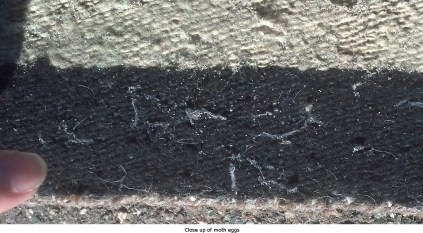
moths. About the size of a grain of rice, Eggs Close upthese small pests tend to lay their eggs in dark and undisturbed
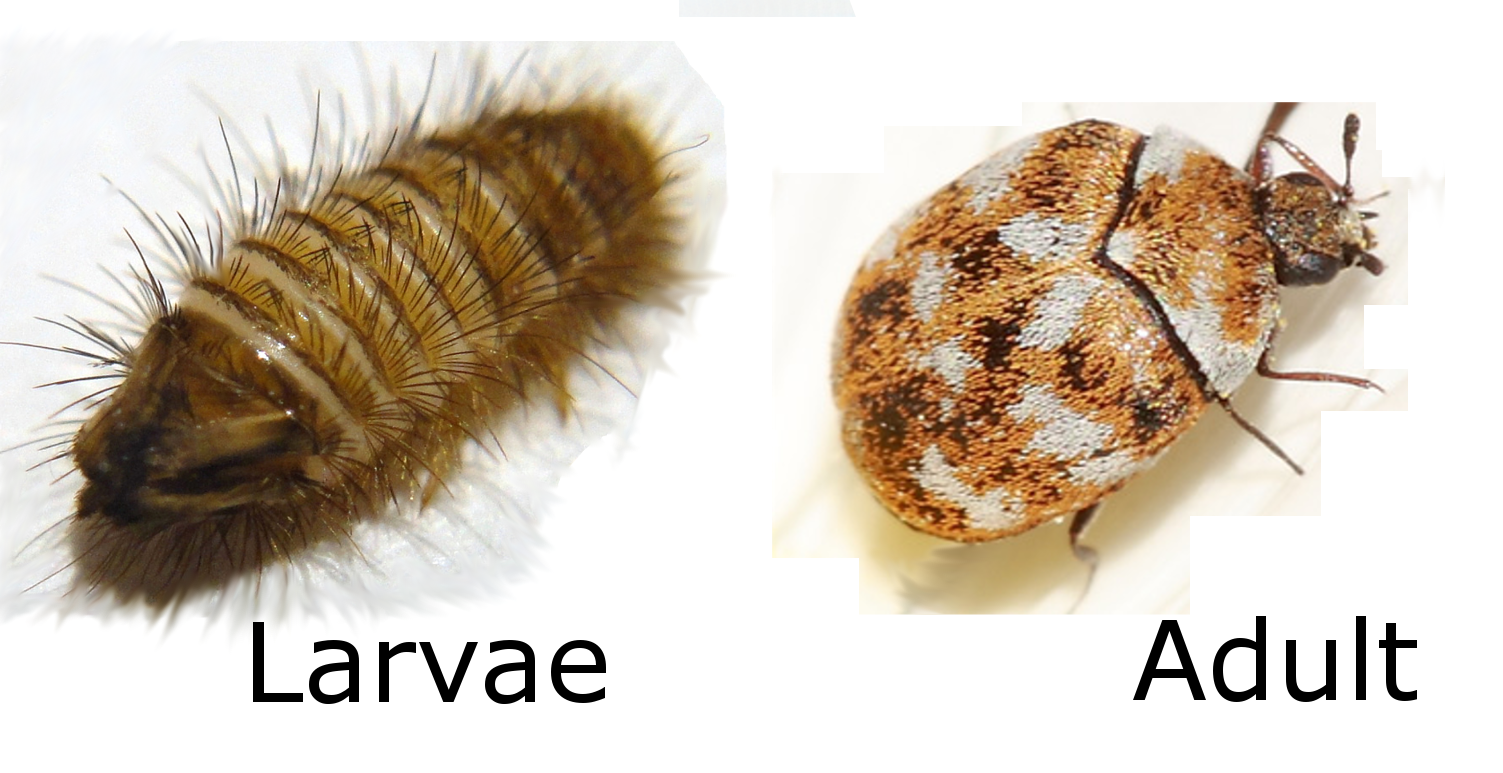
places on your rugs. Once the eggs hatch, the larvae begin to quickly eat their way thorough wool, silk, or any other protein fiber. Regular inspection of at risk areas goes a long way to preventing damage and keeping your rugs safe, but if you ever do find evidence of moth eggs, call a rug cleaning professional right away.

CB-L&ALess common than the wool moth, but every bit as dangerous to your rug is the carpet beetle. Smaller than Abraham Lincoln’s face on a penny, carpet beetles are tiny, but don’t be fooled by their size. Just like moths, they can lay their eggs in your rugs and chew through your rug in a few days.

If you have a pest infestation, be it moth or carpet beetle, always remember to call a professional. Proper cleaning will remove the infestation, kill any eggs hiding in the pile or foundation of the rug, and go a long way toward preventing future damage.

Rugs of the World – Bidjar

For centuries, Persia, or Iran, has been considered the center of weaving in the Middle East. A huge variety of rug types and qualities come from this country. One of the most well known and strongest types of Persian rugs is Bidjar. Among the finest rugs woven in the world, Bidjar is a classic Persian design that hails from the Kurdistan region of Iran.

Often referred to as the “Iron Rugs”, Bidjar are woven to be the some of strongest rugs in the world. What makes a Bidjar so strong? A combination of excellent wool quality, high knot counts, and very dense weaving. It is commonplace to see Bidjar carpets well over 100 years of age and most produced today will last a century or longer even under heavy use and traffic.

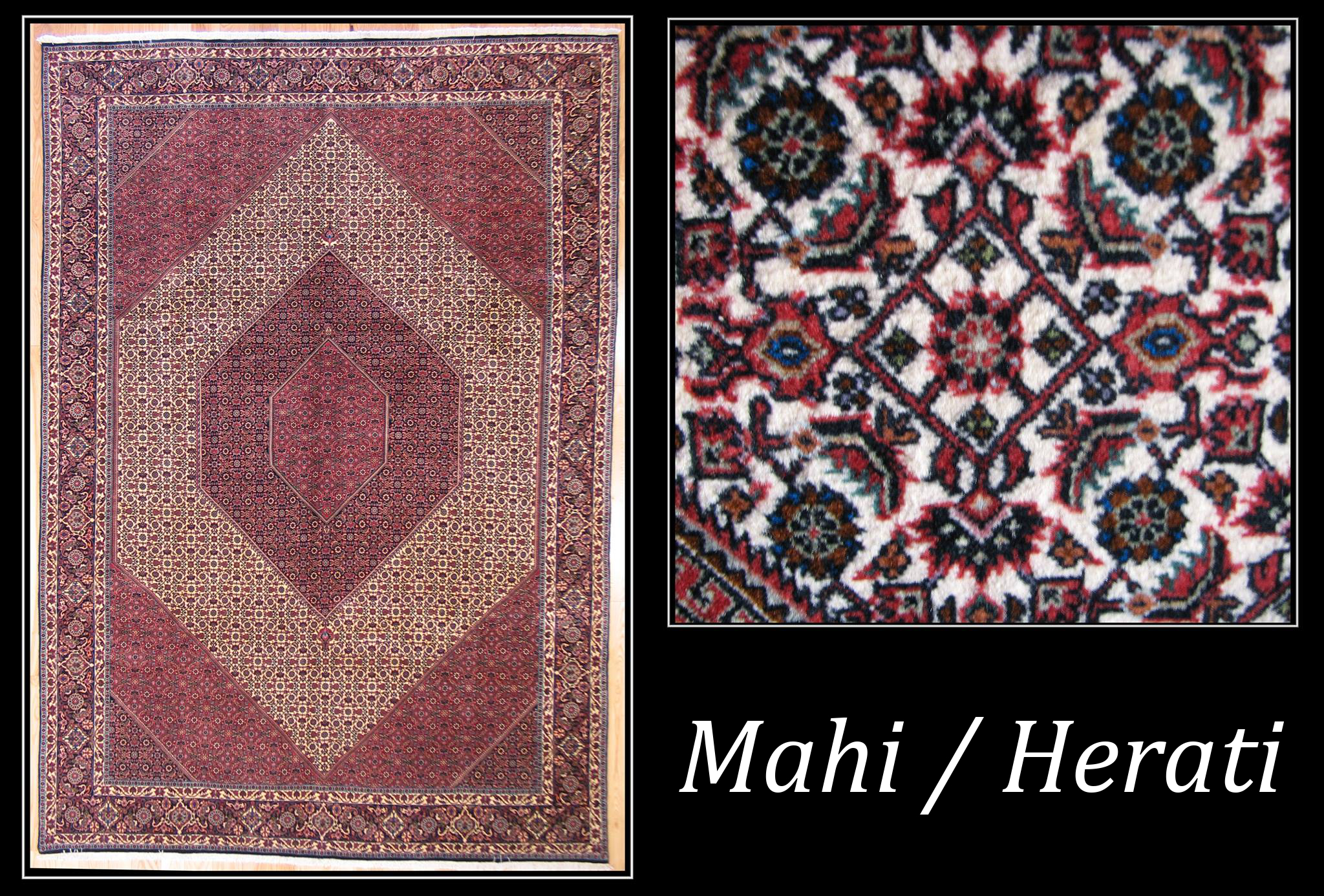
Contemporary Bidjar are generally woven in one of three different patterns. Mahi / Herati, Gol’farag, and Rose. Most commonly the Mahi / Herati or “Fish” pattern. This consists of large diamond shaped medallions that step outward from the center filled with a complex repeating motif within each. The larger medallions represent a pool of water and the concentric circles that form after a pebble is thrown into it. The smaller repeating motif is a highly stylized represent a fisherman in his boat who saw two fish swimming around the reflection of the moon. This motif, known as Herati, is used often in many different Persian rugs.

Bidjar - Mahi

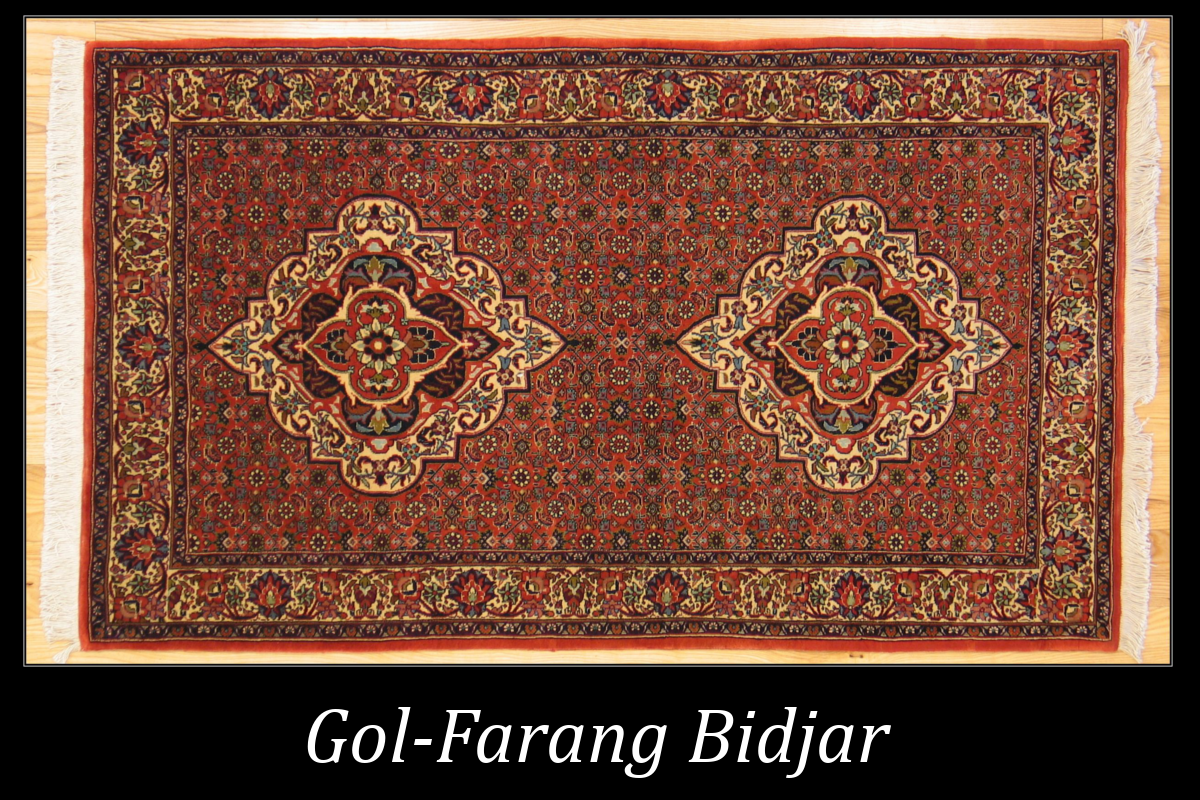
Second most common is Gol-Farang. In English, Gol-Farang means “Foreign flower” these rugs rely heavily on traditional Bidjar motif and structure but usually will have medallions that are much more decorative and floral in their structure. In fact, the medallions in such rugs take their influence from more European design. This creates a rug that seamlessly blends the Persian and European design into one.

Gol-farang Bidjar

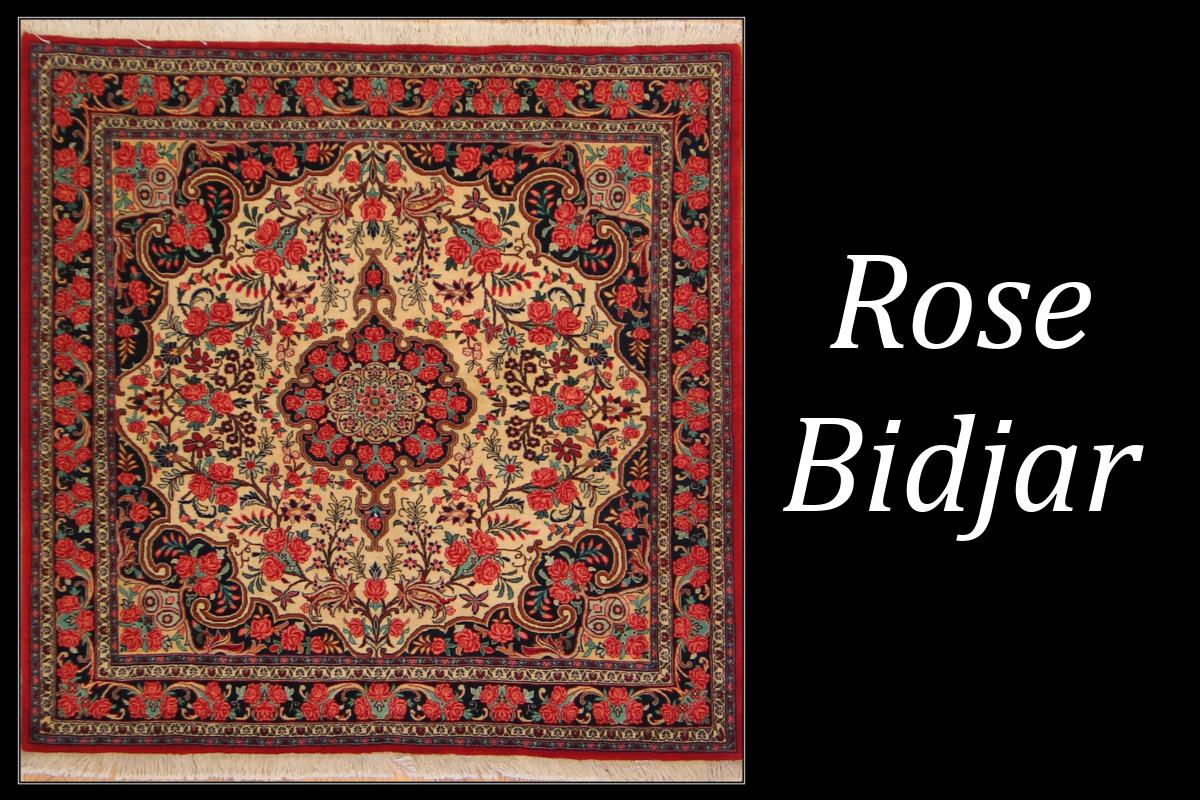
Lastly are a type of Bidjar known as “Rose” Bidjar. These in take heavy influence from European motifs and were in fact, back in the late 19th century, done for the European marketplace. With time, the people of the region adopted the patterns and today they have worked their way into the lexicon of traditional Bidjar rugs.

Rose Bidjar

We hope you found this article informative. Always remember that Serafian’s is here for all your rug needs.